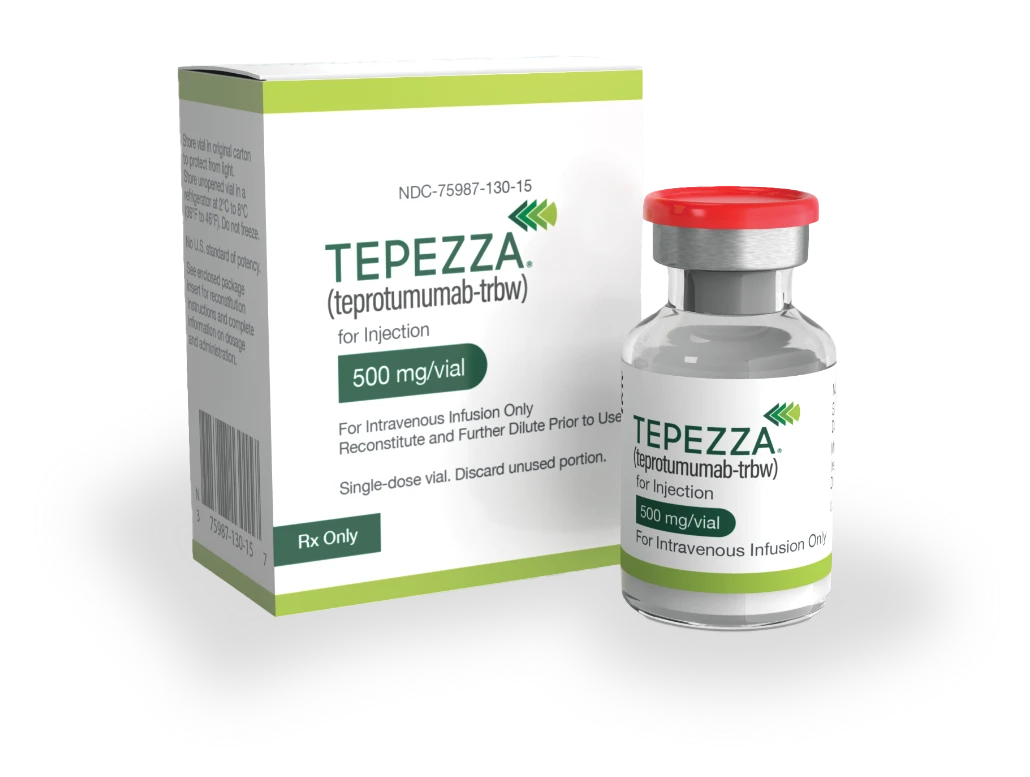
Tepezza (Teprotumumab)
Thyroid Eye Disease
Teprotumumab — The First Targeted Therapy for Thyroid Eye Disease
Thyroid eye disease is a progressive autoimmune condition in which the immune system mistakenly attacks the tissues surrounding the eye — causing the eyes to bulge forward, eyelids to retract, and in more severe cases, double vision and genuine threat to sight. For decades, treatment was largely reactive: surgeons could only address the structural consequences of the disease after it had run its natural course. Teprotumumab changed that entirely. As the first FDA-approved therapy targeting the IGF-1R receptor — the biological pathway driving the inflammatory cascade in thyroid eye disease — Tepezza works at the source, during the active phase of disease, when intervention has the greatest impact. Rather than correcting what the disease leaves behind, Tepezza works to interrupt the process itself. At Davidorf Eye Group, our fellowship-trained oculoplastic surgeons have the subspecialty expertise to evaluate your candidacy, oversee your infusion course, and integrate Tepezza into a comprehensive treatment plan that accounts for both your medical and surgical needs.

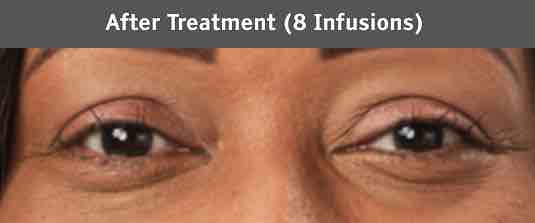
Before
What Tepezza Can Do For You
Produces meaningful reduction in proptosis — the forward displacement of the eyes — in the majority of treated patients
Improves or resolves double vision caused by swelling and scarring of the eye muscles
Reduces eyelid retraction and the wide, staring appearance characteristic of active thyroid eye disease
Addresses the underlying biological driver of the disease rather than its surface manifestations
May significantly reduce the need for — or extent of — surgical intervention following treatment
Administered over a structured course of eight infusions, with results that can be lasting
What to Expect
Tepezza is delivered as an outpatient intravenous infusion, administered every three weeks over eight sessions — each lasting approximately sixty to ninety minutes. Most patients tolerate the treatment well, though potential side effects including blood sugar fluctuation, infusion reactions, and changes in hearing require careful monitoring throughout the course. Our team coordinates closely with your endocrinologist, conducts a thorough evaluation prior to initiating therapy, and reassesses your response and surgical candidacy at the conclusion of treatment. You will be guided through every step with the attentiveness and discretion this diagnosis deserves.