Lower Blepharoplasty
Cosmetic
Lower Blepharoplasty — Restoring the Foundation of a Youthful Eye
The lower eyelid and its transition into the cheek constitute one of the most anatomically complex and aesthetically sensitive regions of the face. Aging in this area is multifactorial — herniated orbital fat produces visible bags, volume loss deepens the tear trough, skin laxity contributes to wrinkling and descent, and the lid-cheek junction loses the smooth, continuous contour that characterizes youth. Addressing these changes requires a nuanced surgical understanding that goes well beyond simple fat removal. We approach the lower eyelid with a comprehensive anatomical philosophy — redistributing or conservatively removing herniated fat, restoring volume where it has been lost, tightening the lower lid where laxity exists, and addressing the skin surface as indicated. The goal is never an operated appearance, but rather the seamless restoration of a lower eyelid that looks rested, smooth, and naturally continuous with the cheek below.
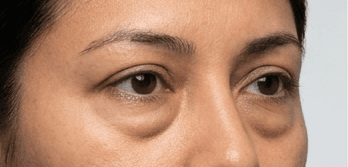

Before

What Lower Blepharoplasty Can Address
Herniated orbital fat producing visible under-eye bags and puffiness
Tear trough deformity and the shadow it casts beneath the eye
Lower eyelid skin laxity, fine wrinkling, and textural irregularity
Lid-cheek junction descent and the loss of a smooth lower eyelid contour
What to Expect
Lower blepharoplasty may be approached through a transconjunctival incision — placed entirely inside the eyelid and leaving no external scar — or through a subciliary approach when skin removal is indicated. Bruising and swelling are typically more pronounced than with upper blepharoplasty. Our surgeons will determine the most appropriate technique based on your anatomy, goals, and prior surgical history.